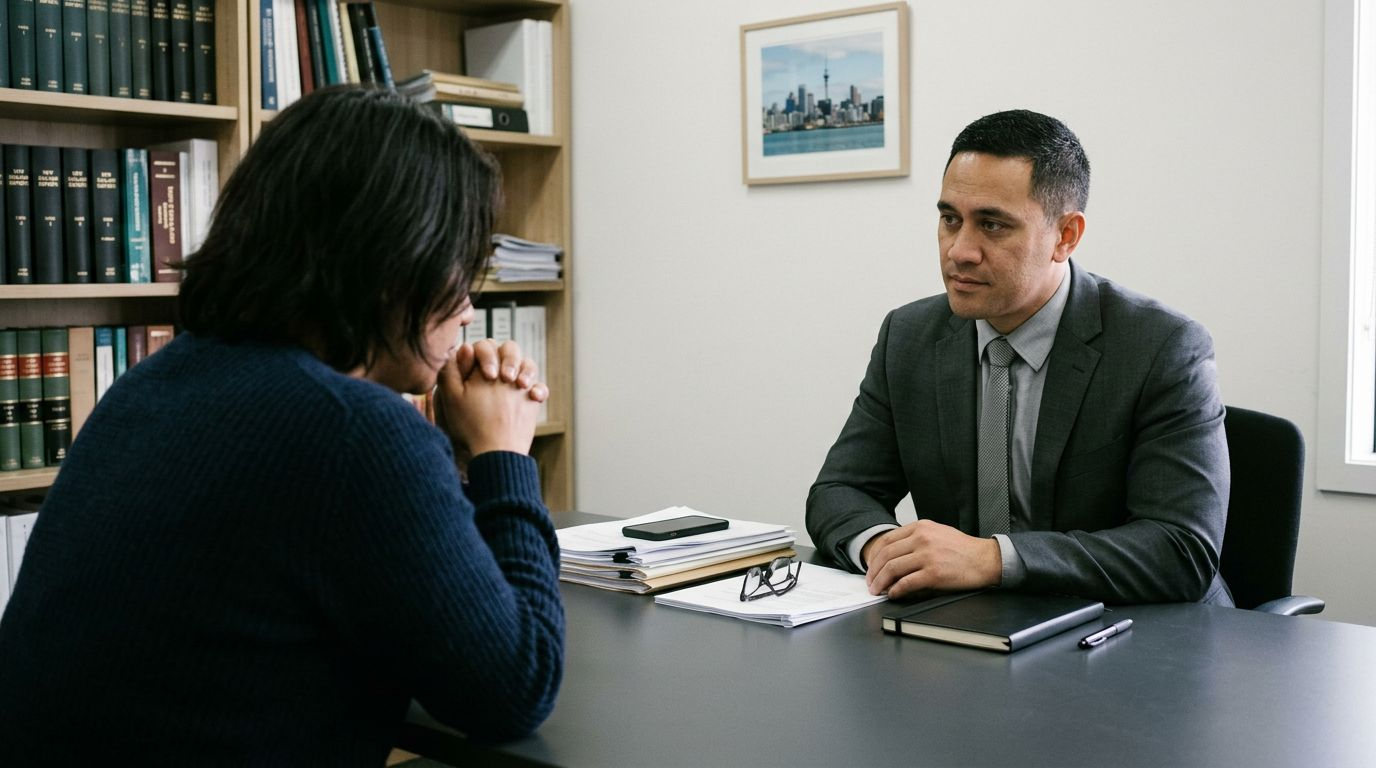

The Appellate Process: Seeking Justice After a Conviction
Criminal Appeal Lawyer: Expert Appellate Advocacy and Legal Advice in Auckland
Key Takeaways
- Appeals must generally be filed within 20 working days of the decision or sentence.
- The High Court manages nearly 2,000 criminal appeals annually, making it a standard part of the justice system.
- Specialist lawyers review trial records to identify legal errors or miscarriages of justice.
- Legal aid is available for eligible criminal appeals in the High Court, Court of Appeal, and Supreme Court.
Convictions in New Zealand are subject to legal review and potential correction through the appellate process. For many people, a trial outcome or a sentencing decision feels like a finality that cannot be challenged, yet the law provides specific pathways to address errors. Appealing a conviction or sentence stands as a standard procedural right within the justice system. In our experience, the success of an appeal often rests on the ability to pinpoint technical legal mistakes that occurred during the original proceeding.
The scale of this work is significant. The High Court handled a substantial volume of criminal appeals in 2024: across New Zealand there were 1,913 new criminal appeals filed and 1,899 appeals disposed of, with 229 appeals still active as at 31 December 2024. These figures highlight that the appellate courts are a busy, technical area of law where hundreds of cases are reviewed every year to ensure the trial process remains fair and accurate.
The Court of Appeal also handles a large volume of criminal appeals. A total of 449 criminal appeals were filed in 2023, an increase of 37 compared to the previous year.
Criminal appeal disposals decreased by 15 to 388. The number of new criminal applications filed in the year 2023 increased by 14 to 106 applications.The number of criminal applications disposed of remained at 92. As at 31 December 2023, the number of criminal applications on hand increased by 14 to 52 applications. As at 31 December 2023, there were 350 criminal appeals on hand, an increase of 61 compared to the previous year.
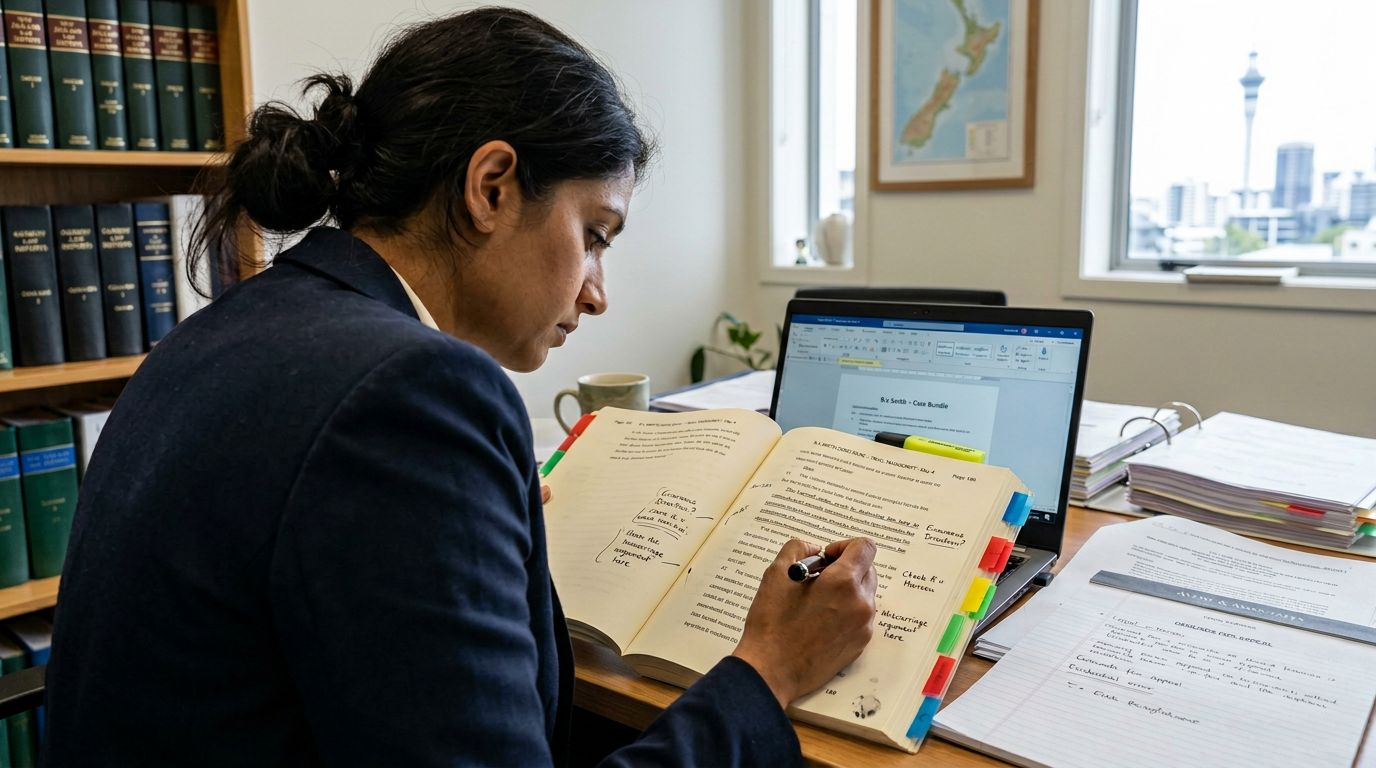
What a Specialist Appeal Lawyer Does
An appellate barrister performs a very different role than a trial lawyer. While a trial focuses on evidence and witnesses, an appeal focuses on the law and the record of what happened in the lower court. As a specialist criminal appeals barrister, we review every transcript, judge’s ruling, and piece of evidence from the original trial. We look for instances where the law was applied incorrectly, where a judge may have misdirected a jury, or where evidence was admitted that should have been excluded.
Our work involves identifying a miscarriage of justice, which is the primary ground for challenging a conviction. This might involve fresh evidence that was not available at the time of the trial or a fundamental error in procedure that made the trial unfair. Whether the case involves a drug offence, a violent crime, or a complex fraud, the goal remains the same: to ensure the result is legally sound. We provide expert legal representation, clear advice, and strong advocacy throughout this demanding process.
Understanding the Appellate Process in New Zealand
The journey of an appeal typically begins in the High Court for District Court matters, or directly to the Court of Appeal for District Court jury trial appeals and High Court trials. In some rare and significant cases, the Supreme Court may grant leave to hear a final appeal. Each level of court has its own set of rules and expectations for written submissions and oral advocacy. We have seen that the most effective appeals are those that present a clear, concise argument regarding a specific legal error rather than simply trying to re-argue the entire trial.
The Ministry of Justice tracks these outcomes closely. Recent justice statistics released in 2024 highlight the scale of criminal charging and sentencing activity in New Zealand, providing a full picture of the system. This volume of cases means that mistakes are a reality of the process. Having an experienced Auckland criminal defence lawyer review your case ensures that these mistakes are identified and brought before a judge for correction.
Strict Time Limits and the 20-Day Rule
Time is the most critical factor when considering an appeal. Under the Criminal Procedure Act 2011, a person has 20 working days from the day of sentencing to appeal their sentence and or conviction. Missing these deadlines can make the process significantly more difficult, as you would then need to apply for an extension of time. The court only grants these extensions if it is in the interests of justice and there is a valid reason for the delay.
We recommend acting immediately if you believe a mistake was made. Even if you are unsure whether you have strong grounds, a prompt review of the judgement is essential. This is particularly true for those navigating your rights and the legal process in Auckland’s criminal courts, where early decisions regarding pleas and bail can have long-term implications for your appeal options.
Grounds for Appeal and Potential Risks
Appeals generally fall into two categories: appeals against conviction and appeals against sentence. An appeal against conviction argues that the finding of guilt was wrong due to a legal error or a miscarriage of justice. An appeal against sentence argues that the penalty imposed was manifestly excessive or that the judge made an error in the sentencing principles applied.
The criminal conviction and sentencing tables provided by Stats NZ show thousands of sentences are handed down annually. In such a high-volume environment, the appellate courts act as a necessary safeguard. We handle appeals on convictions, sentences, bail, and legal questions, with experience in New Zealand’s High Court, Court of Appeal, and Supreme Court, including Legal Aid cases. Daniel has Ministry of Justice approval to conduct criminal Legal Aid appeals to the Court of Appeal and Supreme Court, ensuring that high-quality representation is accessible to those who qualify.
Practical Considerations: Costs and Bail
The cost of an appeal can vary depending on the complexity of the trial and the volume of transcripts that need to be reviewed. For those who cannot afford private representation, criminal Legal Aid is often available for the appellate stage. We can assist with the application process to ensure you have the representation required to challenge a decision. Regarding your freedom during the process, bail pending an appeal is unusual and only granted in exceptional circumstances. In most cases, the sentence continues to be served while the appellate court considers the matter.
If you or a family member has been convicted of a serious offence such as murder, manslaughter, or a regulatory prosecution, the stakes are incredibly high. The impact on your reputation, employment, and freedom is permanent unless the record is corrected. Our approach is to provide a steady, practical assessment of your prospects. We focus on the facts and the law, providing a direct path toward seeking a fair outcome in the higher courts.
The information provided in this article is for general educational purposes only and does not constitute formal legal advice. Criminal law and appellate procedures are subject to change. We recommend seeking professional legal representation to discuss the specific details of your case.

About The Author
Daniel Schellenberg is a highly experienced criminal defence lawyer based in Auckland. With over 15 years of exclusive focus on criminal law, he is a Ministry of Justice-approved provider equipped to handle complex matters in both the District and High Courts.