

Fraud and Financial Crime: Strategy in the Face of Complexity
Fraud Investigation and Admissible Evidence in NZ Fraud Claims
Key Takeaways
- Fewer than one percent of serious fraud complaints in New Zealand result in a prosecution.
- The Crown must prove a specific intent to deceive at the time of the incident to secure a conviction.
- Digital records and financial ledgers are the primary battlegrounds for evidence admissibility.
- Legal aid funding through PAL 1 to 4 proceedings is available for serious fraud charges.
- Early legal advice is essential to protect your right to silence and challenge how evidence was obtained.
Disclaimer: This article provides general information only and does not constitute legal advice. If you are under investigation or facing charges, you should seek professional legal counsel immediately.
Facing a fraud investigation feels like being caught in a storm of paperwork and accusations. The weight of the Crown, with its vast resources and specialist investigators, can be overwhelming. In our experience, the most effective way to manage this pressure is to understand that a fraud case is a battle over evidence and interpretation. It is rarely a simple story of right and wrong. Instead, it is a contest over complex ledgers, digital footprints, and the specific intent behind financial transactions.
New Zealand maintains a reputation for low corruption, yet the agencies tasked with policing financial crime are more active than ever. The Serious Fraud Office (SFO), which is the lead agency for investigating serious or complex financial crime, has recently updated its focus to target emerging risks. While the number of complaints is rising, the actual number of cases that reach a courtroom remains small. This selectivity means that if you are facing a prosecution, the Crown has likely invested significant time and resources into building their case. We focus on dismantling that case by scrutinising every piece of evidence they intend to use against you.
The Reality of Fraud Prosecutions in New Zealand
How difficult is it to prove fraud? The statistics suggest it is a high bar for the authorities to clear. According to a Victoria University of Wellington analysis, over the past six years, fewer than one percent of complaints resulted in an SFO prosecution. This "white-collar crime gap" exists because proving serious fraud requires more than just showing a financial loss. It requires proving a dishonest intent that can withstand intense legal scrutiny.
Despite this low prosecution rate, the SFO remains a formidable opponent. In the SFO 2024–2025 Annual Report, the office recorded 23 separate prosecutions before the courts, involving 54 defendants and an alleged combined fraud value of approximately $174.5 million. These figures show that when the Crown chooses to act, they go after high-value targets with multiple defendants. They use multidisciplinary teams of investigators, forensic accountants, and electronic forensic experts to weave a narrative of dishonesty. Our role as an Auckland fraud lawyer is to provide a defence that matches that level of preparation, ensuring that your side of the story is told through the same technical lens.
What Evidence is Needed to Prove Fraud?
The Crown must prove several elements beyond a reasonable doubt to secure a fraud conviction. At its core, fraud is a dishonest activity that causes a financial loss. The prosecution must show that there was an intention to deceive at the time of the incident. Without this specific intent, a case may simply be a matter of poor business judgment or a civil dispute rather than a criminal offence.
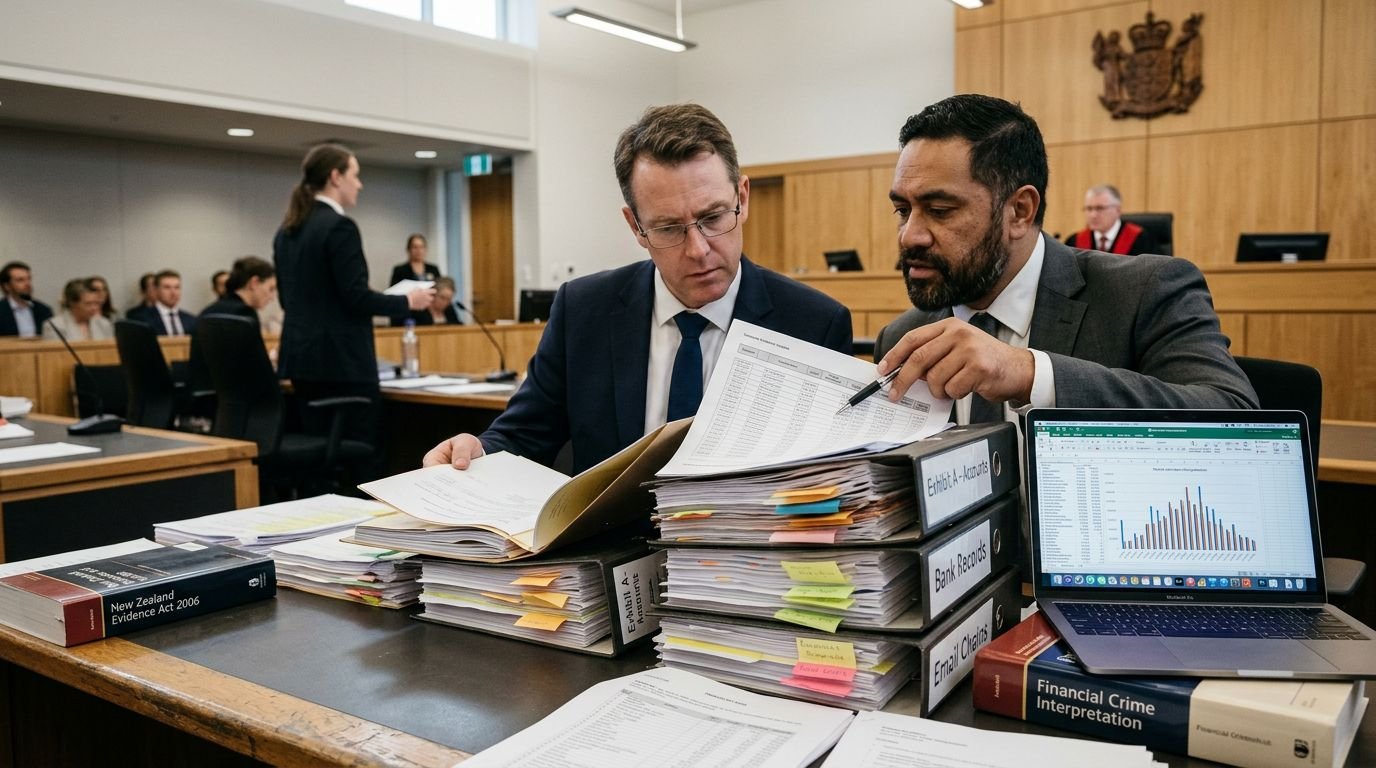
Evidence of fraud typically falls into three categories: documentary evidence, digital material, and witness testimony. Documentary evidence includes bank statements, invoices, and contracts. Digital material covers emails, text messages, and metadata from devices like laptops and phones. Witness testimony often involves employees, business partners, or experts who can speak to the transactions in question. We have seen cases where a single email, taken out of context, is used by the Crown to infer a dishonest motive. Our job is to provide the context that disproves that inference.
The interpretation of these documents is where many cases are won or lost. The Crown might look at a series of complex transactions and see a deliberate attempt to hide funds. We work with forensic accounting specialists to show that those same transactions were legitimate business moves or the result of accounting errors. By providing an alternative, lawful explanation for the financial trail, we can create the reasonable doubt necessary for an acquittal.
Strategic Focus Areas and Emerging Risks
The SFO has recently refreshed its Strategic Areas of Focus to address modern threats. These include fraud enabled by emerging technology like AI and cryptocurrency, as well as the misappropriation of targeted government funding. There is a particular emphasis on frauds perpetrated by trusted professionals or professional enablers. If you are a director, manager, or contractor, you may find yourself under increased scrutiny because of your position of trust.
Public sector fraud is another major priority. Estimates suggest that up to $12.97 billion, or about 5% of government funds, is lost to fraud and error annually in New Zealand. This massive figure puts immense political pressure on agencies to make examples of those they investigate. Whether it involves procurement processes, wage subsidies, or emergency recovery funds, the Crown is looking for cases that create a deterrent effect. We understand this pressure and work to ensure that our clients are treated fairly, rather than being used as a statistic in a government crackdown.
Your Rights and the First Steps in an Investigation
If you are being questioned by the Police or the SFO, your first and most important right is the right to silence. According to Community Law, when Police hold you for questioning, they must tell you that you have the right to remain silent and to speak to a lawyer without unnecessary delay. Anything you say can be used as evidence in court, and early admissions are often the hardest pieces of evidence to overcome later.
The Serious Fraud Office has a special power to require the attendance before the Director, to produce documents and answer questions under section 9 of the Serious Fraud Act 1990. This notice must be in writing. You must be given a reasonable opportunity to arrange for a lawyer to accompany you to the attendance. This is an exception to the right to silence. It is a criminal offence under section 45 to refuse or fail without lawful justification or excuse to do so. The maximum penalty on conviction in the case of an individual is imprisonment for a term not exceeding 12 months or a fine not exceeding $15,00 or in the case of a corporation a fine not exceeding $40,000.
We strongly advise exercising your right to silence until you have consulted with a criminal defence lawyer in Auckland who understands the nuances of fraud law. Police may suggest they have more evidence than they actually do to pressure you into a confession. In reality, they may only have enough for an inquiry, and without your statement, they may not have enough to proceed to a charge. We can help you manage these interactions and ensure that your rights are protected from the very beginning.
Search warrants are another common tool in fraud investigations. Investigators may seek to obtain laptops, phones, and physical documents from your home or office. However, they require a warrant to do so, and that warrant must be based on sufficient evidence of fraudulent activity. We can review the validity of these warrants and challenge the admissibility of any evidence that was unlawfully obtained. If the Police exceeded their authority or the warrant was based on false information, we can apply to have that evidence excluded from the trial.
The Practical Costs and Funding of Your Defence
Defending a serious fraud case is a significant undertaking. It often requires hundreds of hours of document review, legal research, and expert consultation. Costs can vary depending on the complexity of the ledgers and the number of charges involved. However, financial constraints should not prevent you from receiving a high-quality defence. We have Ministry of Justice approval to act in Criminal Legal Aid PAL 1 to 4 proceedings. This means we can represent clients on any criminal charge, including serious fraud that carries the potential for significant prison time.
Whether you are self-funding your defence or applying for legal aid, we provide clear guidance on the likely costs and the steps involved. Our goal is to provide a steady, professional defence that focuses on the facts. We have helped many clients avoid jail time and minimise financial loss by identifying inconsistencies in the prosecution's case and challenging the credibility of their witnesses. We believe that every defendant deserves a fair trial where the burden of proof remains firmly on the Crown.

Challenging the Crown's Narrative
In a fraud case, the prosecution often tries to paint a picture of a lavish lifestyle funded by dishonest means. They may point to specific transactions or a "dishonest conduct" to persuade a jury of your guilt. We counter this by focusing on the authenticity of the documents and the truthfulness of the testimony. We look for the "why" behind the actions. Was there a genuine belief that the representation was true? Was there a lack of intent to deceive? These are the questions that can turn a case in your favour.
The cumulative effect of small inconsistencies can be powerful. If we can show that the Crown's investigator missed key documents or that a witness has a motive to lie, the entire prosecution case begins to weaken. We use our analytical skills to unpack the Crown's "story" and replace it with a factual account of what actually happened. This requires a deep understanding of both the law and the practicalities of business and accounting. You can learn more about Daniel’s fraud and serious crime defence expertise and how our team approaches these complex cases by visiting our expertise page.
Fraud litigation is not just about the law; it is about the data. In an era where digital transactions leave a permanent trail, the ability to interpret that trail is the most important tool in a lawyer's arsenal. We are committed to providing that expertise to every client we represent, ensuring that the evidence is tested, the rights are protected, and the best possible outcome is achieved.
About The Author
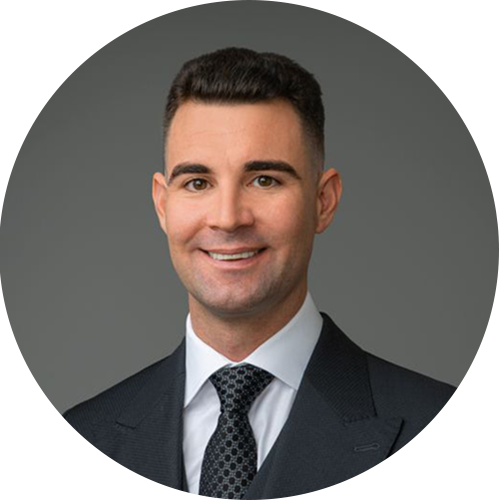
Daniel Schellenberg is a highly experienced criminal defence lawyer based in Auckland. With over 15 years of exclusive focus on criminal law, he is a Ministry of Justice-approved provider equipped to handle complex matters in both the District and High Courts.